Around 560,000 new apps were released on Apple’s App Store in the first half of 2026. That’s as many as for the whole of 2025.
But while the number of new releases doubled year-on-year, downloads grew by just 2%. Most of the flood of new apps gets close to zero downloads.
AI-assisted app building, or “vibe coding”, has made it much faster and cheaper for more people to ship an app. This is genuinely useful. A working prototype that might once have taken months can now be made in days.
But easier building hasn’t created more demand. It hasn’t produced more people who need another habit tracker, photo editor or personal finance app.
Across iOS and Google Play, the top 1% of publishers received 92.2% of in-app purchase revenue in 2025. Just being in the app store was never enough. Now the stores are considerably more crowded.
Same app, different coat of paint
In response Apple recentlty clarified its long-standing App Review rule on spam and added more examples of what it won’t accept.
Guideline 4.3(b) tells developers not to submit apps that are “indistinguishable from what’s already widely available”. Apple specifically names dating, flashlight, sound effects, wallpaper, simple timer and fortune-telling apps. New submissions in these categories need to offer a meaningfully different or improved experience.
This isn’t a policy against apps built with AI. Apple doesn’t appear to care whether a developer used an AI coding tool. It cares whether the result gives people anything they can’t already get from the last twenty apps in that category.
AI has simply made it much easier to produce the same app with a different coat of paint. Apple now has an avalanche of them to review.
LinkedIn has the same problem
LinkedIn is responding to its own flood of AI-generated content.
On 20 May, it announced systems trained to recognise generic or repetitive AI content. Posts that appear to be generated by AI and lack a clear perspective are now less likely to be distributed beyond the author’s immediate network.
In July, LinkedIn added a “Seems like AI slop” button. Reports give its detection models another signal to learn from. It also began retiring its own “Enhance your post” rewriting tool and replacing it with one that proofreads without changing the author’s voice.
The App Store and LinkedIn are very different products, but the problem is much the same. The cost of creating something has fallen. The amount of human attention available hasn’t increased with it.
For Apple, thousands of interchangeable apps make it harder for people to find something useful. For LinkedIn, generic posts crowd out real experience and expertise. Neither platform benefits from raw volume when that volume makes the product worse.
An app that exists mainly because new tools made it easy to ship is exactly what’s flooding the App Store. A post published mainly because AI made it quick to write is what’s drowning out good content on LinkedIn.
Neither company is penalising the use of AI. They’re responding to what happens when AI is used in place of judgment.
Build the reason first
AI can help a good product team move faster. It can make prototypes cheaper, shorten feedback loops and let people test ideas that might otherwise have been too expensive to explore.
It can also let us skip over some awkward questions and start building before we know whether the idea deserves to be built.
Getting a working app onto a phone used to be significant proof of progress. Increasingly, it only proves that the tools work. The evidence that the product matters still has to come from the people expected to use it.
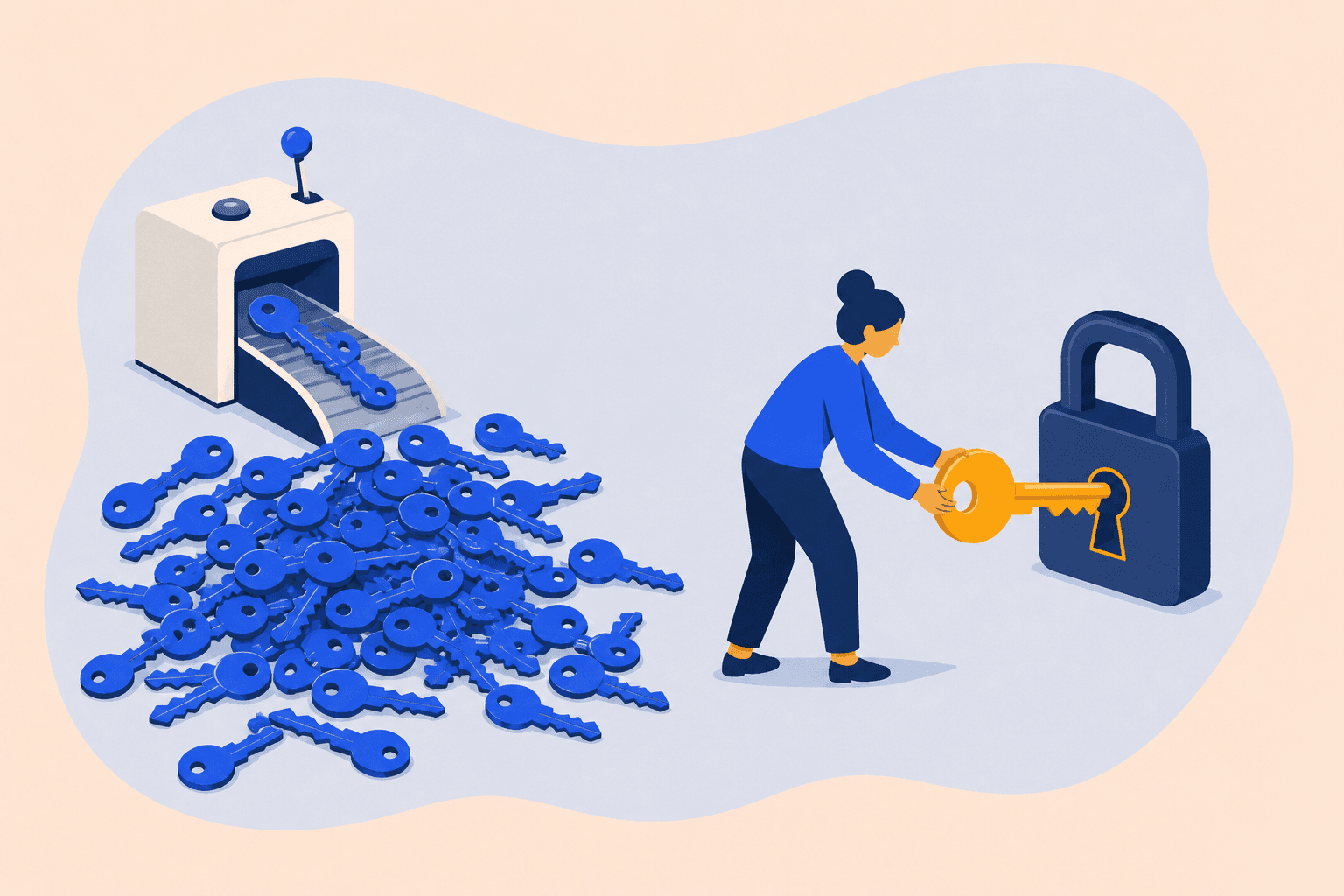
If you’re building an app and can’t yet answer who it’s for, what problem it solves, how people solve that problem today and why they would choose your version, that’s worth working through before App Review makes the decision for you.
AI has changed the cost of building. It hasn’t changed the need to build something worth choosing.
Let's create something unique together