Countdown (now Woolworths New Zealand)
Building Countdown's shopping app, from the first line of code to handover
We designed and built Countdown's shopping app for iOS and Android, kept building it for two years, then trained Countdown's own team to take it in-house.
- App development
- Discovery
- Digital product strategy
What we delivered
- Design and development of Countdown's iOS and Android shopping app, end to end
- Two years of building, releasing and improving the app alongside Countdown's team
- Training Countdown's own developers to take the app in-house
- Refreshed click and collect apps, relaunched as Pick up in 184 stores
- Discovery, competitor research and a roadmap for the digital shopping list
- An API review that set the app up for sign-in, sync and multiple stores
Starting with the list
In 2017 Countdown set out to reinvent its mobile offering as part of becoming New Zealand's number one food store. We started with a discovery workshop to work out where an app could make the biggest difference to people's weekly shop. The work that followed focused on two moments: planning what to buy, and picking it up.
Pick up, rebuilt
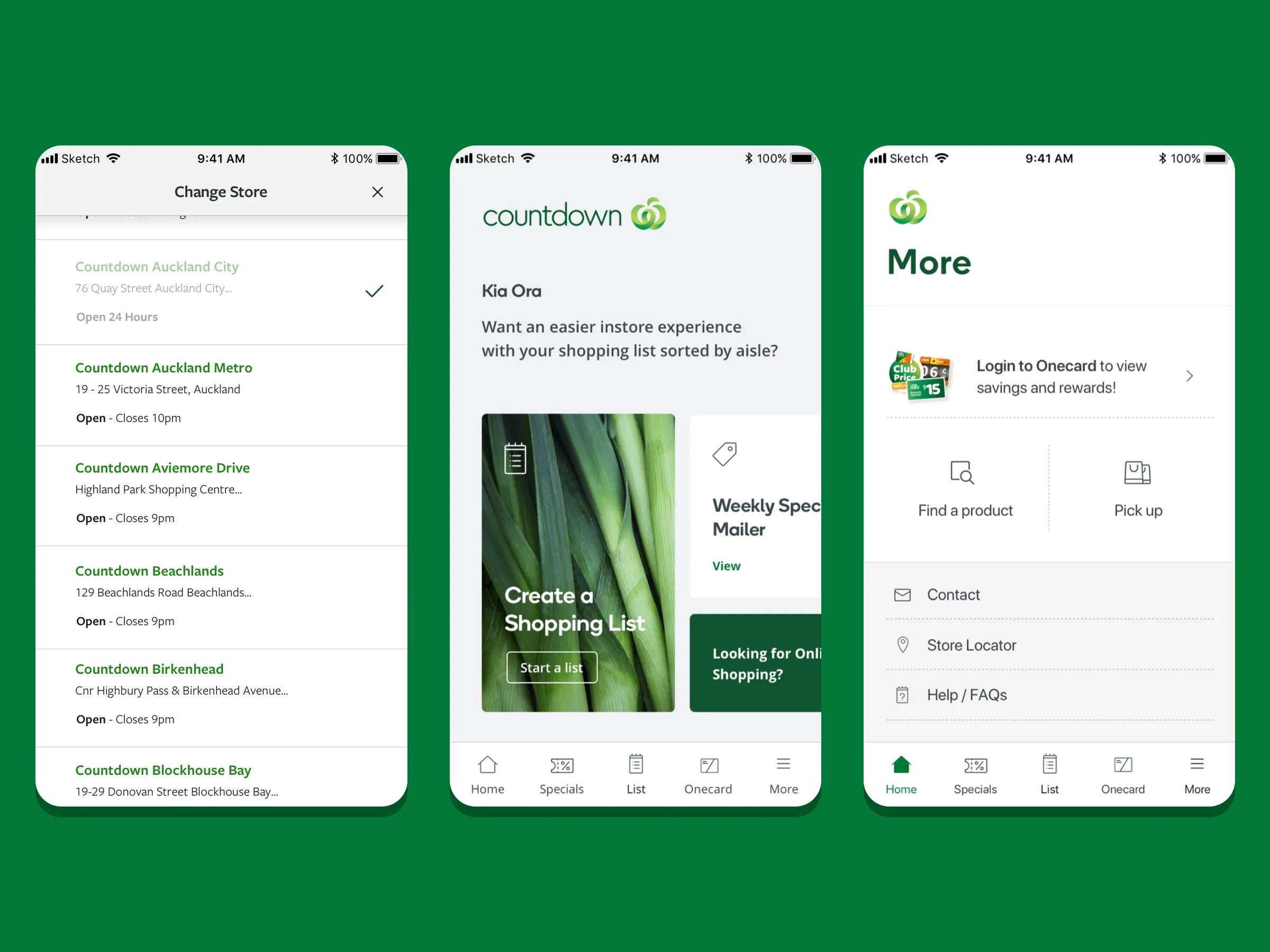
The first thing we shipped was Pick up. Countdown's click and collect apps were white-label apps with no way to sign in. We took them over, refreshed them and relaunched them as Pick up for 184 stores in early 2018, kept them working with the location technology already in Countdown's stores, added push messages and a prompt to upgrade, and designed them so single sign-on could be added later without starting again.
Designing the shopping app
Next, and much bigger, was a new shopping app built around the list. We looked at how others had solved it, from Coles and Ocado to list apps like AnyList and Todoist, and at what customers would expect as a minimum. That fed a roadmap with features like more than one list, sharing a list with your household, adding items by barcode, photo or voice, swapping products, and showing which aisle things are in.
We also reviewed Countdown's APIs, the services the app talks to. Our recommendations included a proper customer profile, one way to sign in instead of four, lists that sync across devices, and store hours in the store's time rather than the phone's.
Building it, and keeping on building
We designed and built the whole shopping app, myCountdown, natively for iOS in Swift and Android in Kotlin. Pick up became part of it. It sorted your list by aisle and could hand it straight to online shopping, tracked your pick-up order and let the store know you were on your way, carried your Onecard with a live balance, and showed the weekly specials with one tap to add them to your list.
We didn't stop at launch. For around two years we kept building and releasing it, from 2019 as one squad with Countdown: iOS and Android developers, design, testing, a business analyst and a producer, with a strategy day on site every month.
Handing it over
As Countdown grew its own digital team, we trained their developers up to take the app in-house, filling gaps with our own iOS and Android developers while they did.
The app has kept growing since. In 2020 Countdown added online shopping to it nationwide, and today Woolworths New Zealand fulfils more than eight million online orders a year.